Broken Protocols: Why Undergraduate Students Cannot Reproduce the Experiments That Built Modern Science
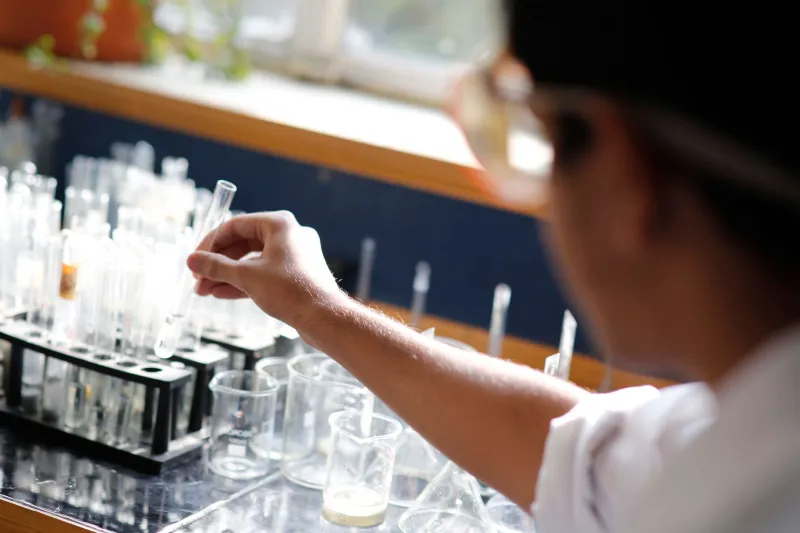
In laboratories across American universities, a quiet failure unfolds each semester. Undergraduate students open their course manuals, follow carefully printed instructions, and attempt to reproduce experiments that have appeared in peer-reviewed journals—experiments that, in theory, should yield predictable, verifiable results. Increasingly, they do not. Measurements drift. Controls behave unexpectedly. Conclusions refuse to materialize. And when students raise their hands to report these discrepancies, they are often told, implicitly or explicitly, that they must have done something wrong.
This assumption—that failure belongs to the student rather than to the system—deserves serious scrutiny. The inability of undergraduates to reproduce published scientific findings is not merely a classroom inconvenience. It is a diagnostic symptom of a deeper misalignment between how science is taught in American higher education and how it is genuinely conducted in research settings. Understanding that gap, and closing it, may be among the most consequential challenges facing science education today.
The Replication Problem Arrives in the Classroom
The broader scientific community has grappled with a replication crisis for more than a decade. Studies in psychology, biomedicine, and social science have repeatedly failed independent verification, prompting urgent conversations about methodology, statistical practice, and publication bias. What has received considerably less attention is how this same crisis manifests at the undergraduate level—where the consequences extend beyond individual research programs and into the formation of scientific identity itself.
When a graduate student or professional researcher encounters an irreproducible result, they possess the conceptual tools to interrogate it: they can scrutinize reagent purity, revisit statistical assumptions, consult colleagues, or contact the original authors. Undergraduates, by contrast, typically lack both the technical vocabulary and the institutional confidence to treat experimental failure as meaningful data. Instead, they internalize it as personal inadequacy.
This response is not irrational. Laboratory courses at most American universities are structured around the expectation of confirmatory outcomes. Students are assessed on whether their results match anticipated values, not on whether they can reason rigorously through anomalous ones. The implicit curriculum, in other words, teaches students that science produces clean answers—when in reality, it rarely does.
Outdated Protocols and the Textbook Lag
One structural contributor to this problem is the substantial gap between the protocols printed in undergraduate laboratory manuals and the current state of experimental practice. Many standard lab exercises derive from experiments conducted decades ago, translated into simplified procedures and reproduced across successive editions of widely adopted textbooks. The original studies may have been conducted under conditions—specific reagent concentrations, instrumentation calibrations, environmental controls—that are difficult or impossible to replicate precisely in a contemporary teaching laboratory.
This is not a trivial concern. A procedure designed for a particular spectrophotometer model, a specific cell line passage number, or a reagent formulation that has since been reformulated may simply not behave as described when executed with modern equivalents. Students who follow instructions faithfully and still obtain divergent results are, in a meaningful sense, encountering a genuine scientific problem. Yet the pedagogical framework surrounding them rarely acknowledges this possibility.
Furthermore, textbook authors frequently smooth over the messiness of real experimental work. Published protocols represent idealized accounts of procedures that, in practice, required extensive troubleshooting to optimize. When those optimized protocols are stripped of their developmental context and handed to students as fixed recipes, the implicit message is that science proceeds linearly from hypothesis to confirmation. It does not, and students trained on that fiction are poorly prepared for authentic research environments.
The Missing Curriculum: Troubleshooting as Scientific Practice
Perhaps the most consequential absence in undergraduate laboratory education is systematic training in experimental troubleshooting. In professional research settings, the capacity to diagnose why an experiment has failed—to isolate variables, consult the literature, reformulate hypotheses about sources of error, and design follow-up tests—is considered a core scientific competency. In most undergraduate curricula, it is treated as peripheral at best.
The reasons for this omission are understandable. Teaching troubleshooting requires time, flexible laboratory schedules, and instructors comfortable with open-ended outcomes. It demands that students be permitted to fail productively rather than guided toward predetermined results. These conditions are difficult to achieve within the constraints of large enrollment courses, fixed laboratory periods, and assessment rubrics built around accuracy rather than reasoning.
Yet the cost of this omission is substantial. Students who have never been taught to interrogate an experimental failure cannot distinguish between procedural error, equipment malfunction, flawed source protocols, and genuine scientific uncertainty. They are, in effect, scientifically illiterate about the very process by which scientific knowledge is generated and verified.
Implications for Scientific Integrity
The inability to reproduce experiments carries ethical dimensions that extend well beyond laboratory performance. Science derives its authority from the principle of verifiability—the understanding that claims made in the literature can, in principle, be independently confirmed. When students are trained in a system where this principle is honored rhetorically but violated in practice, they develop a distorted understanding of what scientific integrity actually requires.
Students who learn to report expected results rather than observed ones—whether through unconscious data selection, casual rounding, or straightforward fabrication to meet grading expectations—are being trained in habits that have contributed to some of the most damaging episodes of research misconduct in recent memory. The laboratory course, intended as an introduction to rigorous scientific practice, can inadvertently function as an introduction to its opposite.
This concern has not gone entirely unnoticed. Organizations including the American Association for the Advancement of Science and the National Science Foundation have called for reforms to undergraduate laboratory education that emphasize authentic inquiry over confirmatory demonstration. Course-based undergraduate research experiences, known as CUREs, represent one promising model, embedding genuine research questions into introductory coursework so that students engage with real uncertainty from the outset.
Toward a More Honest Pedagogy
Addressing this problem will require changes at multiple levels of the educational system. Textbook publishers and curriculum developers must commit to updating laboratory protocols with greater regularity and to preserving, rather than erasing, the iterative complexity of real experimental work. Departments must allocate resources to faculty development so that instructors can teach troubleshooting with the same rigor they bring to content delivery. Assessment frameworks must be revised to reward reasoning and transparency about failure rather than penalizing results that deviate from expected values.
Perhaps most importantly, the culture of undergraduate laboratory education must shift toward one in which a failed replication is treated as a scientifically interesting event rather than a student error. When an undergraduate cannot reproduce a published result, that outcome contains information—about the protocol, the equipment, the original study, and the conditions under which scientific claims are reliably transferable. Teaching students to extract that information is not a remedial exercise. It is, in the fullest sense, a scientific one.
The replication crisis that has troubled professional science for a generation did not emerge from nowhere. It emerged, in part, from researchers who were trained to expect confirmation and were never fully equipped to handle its absence. Reforming undergraduate laboratory education will not resolve that crisis overnight. But it is a necessary beginning—and one that American science education can no longer afford to defer.