Engineered to Succeed, Destined to Mislead: How Pre-Optimized Lab Experiments Are Shortchanging America's STEM Students
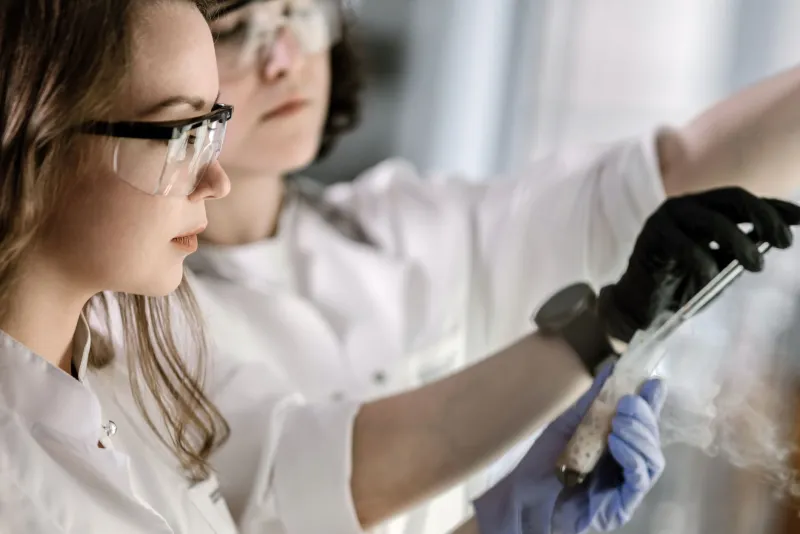
Walk into an introductory biology or chemistry laboratory at almost any American university on a given Tuesday afternoon, and the scene will be familiar: rows of students following laminated instruction sheets, pipetting measured quantities into labeled tubes, waiting for color changes that — if the protocol has been followed correctly — will arrive on schedule. The experiment works. The data confirms the expected outcome. The students record their results, complete their worksheets, and leave having demonstrated competency.
What they have not done, many science educators now argue, is practice science.
The quiet consensus that has governed undergraduate laboratory instruction for decades — that student experiments should be pre-tested, pre-optimized, and reliably reproducible — was built on reasonable intentions. Instructors wanted students to connect theory to observation. Departments needed assessable outcomes. Administrators required pass rates that justified course enrollment. The result, however, has been a laboratory culture that systematically insulates students from the defining experience of actual research: the experiment that doesn't work.
The Protocol Trap
The problem is not that undergraduate labs teach procedure. Procedural literacy — knowing how to operate instruments, handle reagents, and document observations — is genuinely valuable. The problem is that procedure has become the ceiling rather than the floor of laboratory education.
When an experiment is engineered to succeed, students learn to interpret their role as one of faithful execution. Deviation from the protocol is framed as error. An unexpected result signals personal failure rather than scientific opportunity. Over time, this framing conditions students to distrust ambiguous data, to repeat steps until the "correct" answer emerges, and to treat the laboratory as a place where knowledge is confirmed rather than discovered.
This is, in important respects, the inverse of how science actually operates. Professional researchers spend considerable portions of their careers troubleshooting failed experiments, revising hypotheses, and extracting meaning from results that confound expectation. The capacity to do this productively — to interrogate an anomaly rather than dismiss it — is among the most transferable and durable skills a scientific education can confer. Yet most undergraduate curricula treat that capacity as something students will acquire later, elsewhere, presumably in graduate school or on the job.
For the majority of STEM undergraduates who do not continue to graduate research, "later" never arrives.
Measuring What's Easy to Measure
Part of the explanation for the persistence of optimized lab curricula lies in assessment design. Confirming that a student has obtained the expected result is straightforward. Evaluating whether a student has reasoned carefully through an unexpected one is considerably more complex and time-intensive — a meaningful obstacle in large-enrollment introductory courses where a single section may include dozens of students and a single teaching assistant.
The incentive structure compounds the problem. When laboratory grades are tied to outcome accuracy, students face direct consequences for honest data. Instructors at institutions across the country have documented the phenomenon informally for years: students who obtain anomalous results will quietly adjust figures, average away outliers, or simply record what the protocol predicted rather than what they observed. The behavior is not primarily a symptom of academic dishonesty — it is a rational response to an assessment environment that punishes authentic scientific experience.
This dynamic carries implications that extend well beyond the undergraduate classroom. Students who have learned to treat inconvenient data as a problem to be managed rather than a question to be investigated carry that habit of mind into graduate programs, professional research environments, and — in fields with public health or safety implications — into consequential applied practice.
What Productive Failure Actually Looks Like
A growing body of work in science pedagogy is advancing an alternative model, variously described as inquiry-based learning, course-based undergraduate research experiences (CUREs), or simply authentic research integration. The common thread is the deliberate introduction of genuine uncertainty into the laboratory environment.
In practice, this can take several forms. Some institutions have redesigned introductory lab sequences around open-ended investigations in which the outcome is unknown even to the instructor — often because students are contributing to an active research question. Others have introduced "broken" protocols, presenting students with procedures that contain deliberate or realistic flaws and tasking them with diagnosing and correcting the problem. Still others have restructured assessment to weight experimental reasoning and data interpretation over outcome accuracy, explicitly rewarding students who document and analyze unexpected results.
The University of Colorado Boulder, the University of Texas at Austin, and several smaller liberal arts colleges have piloted CURE-based introductory sequences with documented results suggesting improvements in students' scientific self-efficacy, retention in STEM majors, and ability to transfer reasoning skills across novel problem contexts. Critically, these programs have shown particular promise for students from groups historically underrepresented in STEM fields — populations for whom the confidence to persist through failure may be especially consequential.
None of this is administratively simple. Open-ended investigations require more preparation time, more flexible assessment rubrics, and instructors who are themselves comfortable with uncertainty — a comfort that years of teaching optimized curricula can erode. Scaling these approaches across large state university systems presents logistical challenges that pilot programs at smaller institutions do not fully resolve.
The Deeper Curriculum Question
The debate over laboratory design ultimately surfaces a more fundamental question about the purpose of undergraduate science education. If the goal is to produce graduates who can execute established procedures reliably, the current model is reasonably well-suited to the task. If the goal is to develop scientists — people capable of generating, evaluating, and revising knowledge claims in the face of uncertainty — then the current model is working against itself.
There is a compelling argument that American higher education has, under pressure from credential markets and workforce pipelines, quietly settled for the former while continuing to claim the latter. Degree programs advertise critical thinking and scientific reasoning as central outcomes. Laboratory courses, as commonly designed, deliver something closer to technical compliance training.
The replication crisis that has unsettled professional science over the past decade — the widespread discovery that landmark findings across psychology, medicine, and biology cannot be reliably reproduced — has drawn significant attention to methodological practices in research institutions. Less attention has been paid to the possibility that those practices were partly learned, and partly normalized, in undergraduate labs where students first encountered the tacit lesson that results should come out right.
Toward a More Honest Laboratory
Reforming undergraduate laboratory education will not resolve the replication crisis, and it would be an overstatement to suggest that pre-optimized experiments are its primary cause. But the culture those experiments cultivate — one in which unexpected results are problems rather than data — is not unrelated to the broader methodological pressures that have contributed to irreproducible research.
What students need from laboratory education is not protection from failure. They need structured, supported experience of what failure actually demands: careful re-examination of assumptions, honest documentation of anomalous observations, and the intellectual discipline to distinguish between a flawed procedure and a genuine finding. These are learnable skills. They are also, at present, largely untaught.
The laboratory has always been the place in science education where abstraction meets reality. It is past time for that reality to include the full complexity of scientific inquiry — uncertainty, revision, and all.