Settled Until It Isn't: How the Replication Crisis Is Reaching Secondary Science Classrooms
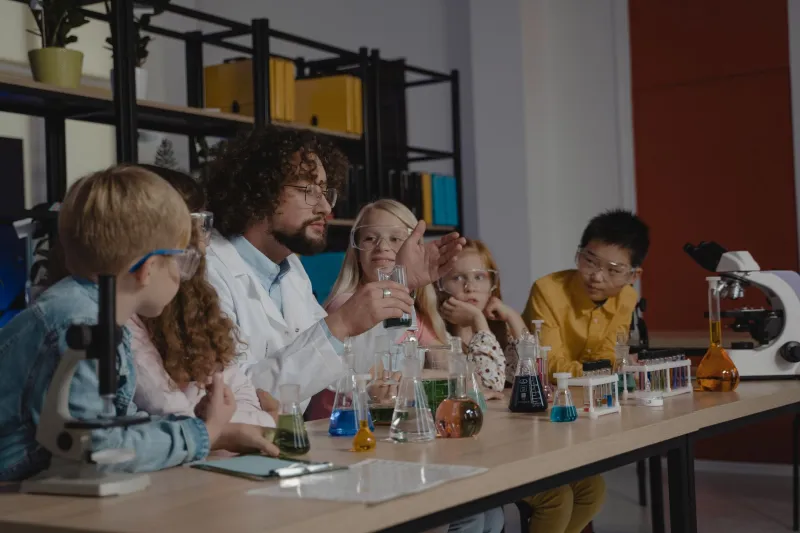
In a high school psychology classroom in suburban Ohio, a teacher introduces a unit on social influence using studies that have appeared in the course textbook for nearly a decade. The findings are presented clearly, the experimental designs described confidently, and the conclusions stated without qualification. What the textbook does not mention—what the teacher may not know—is that several of those foundational studies have since failed independent replication attempts, and the scientific consensus around them has substantially eroded.
This scenario is not exceptional. It is the predictable consequence of a structural mismatch between the pace of scientific revision and the inertia of educational publishing. The replication crisis, which has reshaped conversations in psychology, nutrition science, social science, and increasingly in biomedicine, has yet to be systematically addressed in the secondary classrooms where millions of American students form their foundational understanding of scientific knowledge.
The Gap Between Research and the Textbook
The pipeline from peer-reviewed finding to classroom instruction is long and slow. A study published in a major journal typically takes years to enter a widely adopted textbook, and once incorporated, that content may remain in print and in use for a decade or more. By the time a finding reaches a high school classroom, it has passed through editorial selection, curriculum committee review, state adoption processes, and individual teacher preparation—a gauntlet that filters for clarity and accessibility but not for replicability.
The replication crisis did not emerge from fabricated data or deliberate fraud in most cases, though those exist. It arose from structural features of scientific publishing: a preference for positive results, insufficient statistical power in original studies, undisclosed analytic flexibility, and the absence of routine independent verification. Studies that were conducted in good faith and published in reputable journals have nonetheless proven difficult or impossible to reproduce under controlled conditions.
For researchers, this represents a productive if uncomfortable reckoning with scientific methodology. For teachers working from fixed curricula, it creates a dilemma that most have received no preparation to navigate.
What Teachers Are Working With
A 2022 survey by the National Science Teaching Association found that a substantial proportion of secondary science teachers reported rarely or never discussing instances where established findings had been revised or retracted. The reasons cited were instructive: limited preparation time, curricular pressure to cover required content, and—notably—uncertainty about how to address scientific revision without undermining student confidence in science itself.
This last concern deserves scrutiny. The instinct to protect students from scientific uncertainty is understandable, but it rests on a misunderstanding of what scientific literacy requires. A student who learns that science produces provisional knowledge, subject to revision as evidence accumulates, is better equipped to evaluate scientific claims throughout their life than one who has been taught that scientific conclusions are fixed and authoritative.
The irony is that the replication crisis, properly understood, is not a scandal about science failing. It is a story about science working—about a self-correcting enterprise identifying and addressing its own methodological weaknesses. Taught well, it offers secondary students an unusually clear window into how scientific knowledge is actually constructed and revised.
Specific Domains Where the Problem Is Acute
The challenge is most visible in psychology and the social sciences, where many of the most dramatic replication failures have occurred. Studies on priming effects, ego depletion, power posing, and certain aspects of stereotype threat—findings that generated enormous popular attention and found their way into educational materials—have all faced significant challenges in replication. Yet variants of these concepts continue to appear in AP Psychology materials, introductory social science curricula, and teacher professional development resources.
Nutritional science presents analogous difficulties. Decades of dietary guidance incorporated into health and biology curricula rested on observational studies with methodological limitations that have since become clearer. The relationship between dietary fat, cholesterol, and cardiovascular disease—taught as established fact to generations of American students—has been substantially revised by subsequent research, a revision that has moved slowly if at all into classroom instruction.
Even within the physical and life sciences, where replication problems are less pervasive, the issue of outdated consensus is real. Climate science, evolutionary biology, and neuroscience are all fields where the frontier of knowledge has moved considerably since the most recent edition of many in-use textbooks was compiled.
Teaching Uncertainty Without Teaching Doubt
The pedagogical challenge is genuine. Teachers are rightly concerned that introducing scientific uncertainty could be exploited to justify skepticism toward well-established findings—evolution, climate change, vaccine safety—where the evidence base is robust and the consensus is legitimate. The distinction between scientific uncertainty at the research frontier and manufactured doubt about settled questions is not always obvious to adolescent students.
But that distinction is precisely what scientifically literate citizens need to understand. The goal is not to teach students that all scientific claims are equally questionable. It is to teach them that scientific knowledge exists on a continuum of evidential support, that different types of claims warrant different levels of confidence, and that the appropriate response to uncertainty is careful evaluation rather than either uncritical acceptance or reflexive rejection.
Several pedagogical frameworks have been developed to support this kind of instruction. The "claims, evidence, and reasoning" model, which asks students to evaluate the evidentiary basis for scientific assertions rather than simply memorizing conclusions, has shown promise in secondary classrooms. Case-based approaches that walk students through historical instances of scientific revision—the germ theory of disease, continental drift, the structure of DNA—can illustrate how scientific knowledge changes without implying that it is arbitrary.
A Structural Problem Requiring Structural Solutions
Teachers cannot solve this problem individually. No secondary instructor can be expected to maintain current awareness of replication outcomes across every domain their curriculum addresses, particularly in the absence of institutional support or preparation time.
Addressing the replication crisis in secondary education requires action at multiple levels. Curriculum developers and textbook publishers need review processes that flag findings with contested replication records. State science standards should incorporate explicit expectations for teaching scientific uncertainty and methodological evaluation. Teacher preparation programs must equip future educators to discuss scientific revision honestly and constructively.
Most fundamentally, American science education needs to shift its understanding of what it is trying to accomplish. If the goal is to transmit a fixed body of knowledge, the replication crisis is a problem to be managed. If the goal is to develop students who can think scientifically—who understand how evidence is gathered, evaluated, and revised—it is an opportunity that classrooms across the country are currently missing.