Ranked Into Irrelevance: How College Prestige Scores Are Quietly Rewriting the American Curriculum
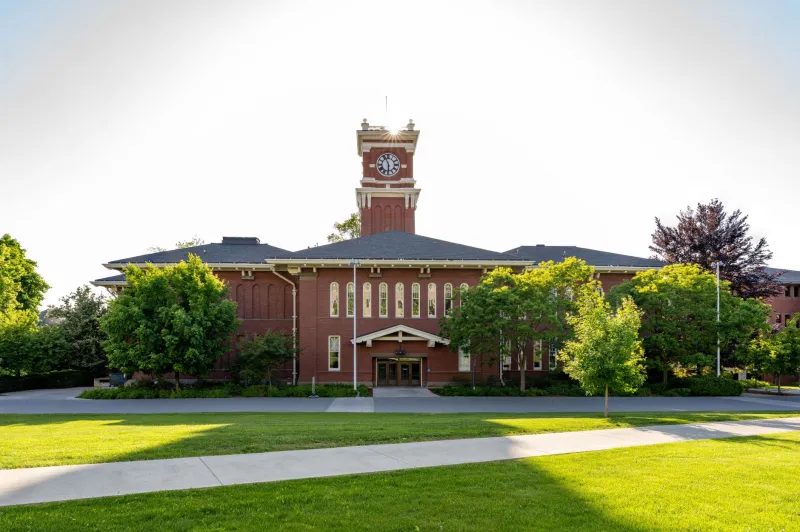
Every August, a familiar ritual plays out across American higher education. Provosts refresh their browsers, department chairs await the verdict, and university communications offices draft either celebratory press releases or carefully worded explanations. The U.S. News & World Report Best Colleges rankings have arrived, and with them, another cycle of institutional self-examination measured not in learning outcomes but in percentile positions.
What began in 1983 as a consumer guide for prospective students has evolved into something far more consequential: an invisible governance structure that shapes how American universities allocate resources, design academic programs, and define institutional success. The rankings were never intended to function as a curriculum framework. Yet evidence suggests that is precisely what they have become.
The Metric That Ate the Mission
The methodology behind major college rankings rewards institutions for factors that are only loosely connected to educational quality. Peer reputation surveys, alumni giving rates, student-to-faculty ratios, graduation rates, and financial resources all feed into composite scores that purport to measure institutional excellence. What they actually measure is something closer to institutional affluence and social prestige—qualities that correlate with educational outcomes but do not constitute them.
The problem emerges when universities begin optimizing for the measurement rather than the underlying value it was meant to represent. Administrators who might otherwise invest in pedagogical innovation, interdisciplinary programming, or support services for underserved populations instead direct resources toward variables that move the needle in rankings calculations. A university that improves its six-year graduation rate by tightening academic requirements and weeding out struggling students may climb the rankings while simultaneously failing the students it was chartered to educate.
This dynamic has a name in social science: Goodhart's Law, which holds that when a measure becomes a target, it ceases to be a good measure. American higher education is living through a prolonged demonstration of that principle.
Faculty Hiring as Rankings Strategy
Perhaps nowhere is the distortion more visible than in faculty hiring. Tenure-track searches at research universities have long prioritized publication records and grant-funding capacity over teaching effectiveness. Rankings amplify this tendency by rewarding research output and institutional reputation—factors that prestigious faculty appointments are believed to enhance.
The consequences for undergraduate instruction are significant. Departments competing for nationally recognized scholars often hire candidates whose primary allegiance is to their research agendas rather than their pedagogical obligations. Graduate teaching assistants absorb an increasing share of introductory instruction at precisely the institutions whose rankings imply the opposite. Students paying premium tuition at top-ranked universities may encounter their most intellectually formative coursework delivered by instructors who are themselves still learning to teach.
This is not an indictment of research faculty or graduate instructors. It is an observation about misaligned incentives. When rankings reward the presence of distinguished scholars rather than the quality of undergraduate instruction, universities will acquire distinguished scholars and manage the instructional consequences accordingly.
Course Catalogs Built for Optics
The influence of prestige culture extends into curriculum design in subtler ways. Programs that generate favorable publicity, attract high-achieving applicants, or align with donor interests receive institutional investment disproportionate to their educational merit. Meanwhile, disciplines that produce demonstrably valuable intellectual formation—philosophy, classical languages, area studies, certain branches of the humanities—contract or disappear because they contribute little to the metrics that rankings reward.
Some universities have restructured their general education requirements not around coherent intellectual frameworks but around the need to demonstrate measurable outcomes that can be reported in accreditation documents and publicized in rankings profiles. The result is curricula that are legible to external evaluators but fragmented in their educational logic—collections of distribution requirements rather than integrated programs of study.
Admissions yield rates, another factor in many ranking calculations, create further distortions. Institutions that admit fewer applicants appear more selective and therefore more prestigious. This incentivizes universities to discourage applications from students unlikely to enroll, a practice that concentrates enrollment among the already-advantaged and depresses socioeconomic diversity without any corresponding educational benefit.
What Students Are Actually Buying
For students and families navigating college decisions, the rankings offer apparent clarity in a genuinely confusing marketplace. That clarity is largely illusory. A ranking position communicates something meaningful about an institution's resources and reputation. It communicates almost nothing about whether a given student will receive rigorous instruction, encounter intellectually challenging peers, or emerge with the analytical capabilities that higher education is supposed to develop.
Research on learning outcomes consistently finds that what students do in college—how much they read, write, discuss, and grapple with difficult material—predicts intellectual growth far more reliably than the prestige of the institution they attend. The universities that deliver on the implicit promise of their rankings are those that have resisted the temptation to optimize for optics and maintained genuine commitment to the educational encounter between faculty and student.
Those institutions exist at every tier of the rankings hierarchy. Some of the most rigorous undergraduate programs in the United States are housed at institutions that U.S. News has never placed in its upper echelons. Some of the most credential-efficient and intellectually thin educational experiences are available at universities whose rankings would suggest otherwise.
Toward Accountability That Serves Learning
The solution is not to abandon institutional accountability or to pretend that all colleges are equivalent. American higher education is a vast and genuinely unequal system, and students deserve accurate information about the institutions they are considering. The problem is not measurement itself but the particular measurements that have come to dominate institutional decision-making.
Alternative accountability frameworks exist. Value-added assessments that measure how much students learn relative to their entering preparation, longitudinal tracking of graduates' civic and professional engagement, and direct evaluation of institutional teaching quality all offer richer pictures of educational effectiveness than the proxy variables that current rankings privilege.
Several institutions have publicly withdrawn from U.S. News rankings participation in recent years, citing concerns about methodological validity and perverse incentives. Their decisions have provoked genuine debate within higher education about what prestige is for and whom it serves. That debate is overdue.
Universities exist to advance knowledge and to form the intellectual capacities of the students who pass through them. Those purposes are not well served by systems that reward the appearance of excellence over its substance. Until the accountability structures governing American higher education are redesigned around learning rather than legibility, the invisible curriculum of prestige will continue to compete with—and too often displace—the education that students were promised.