Guaranteed Results: How Secondary Science Classrooms Are Setting Students Up to Fail in the Real Laboratory
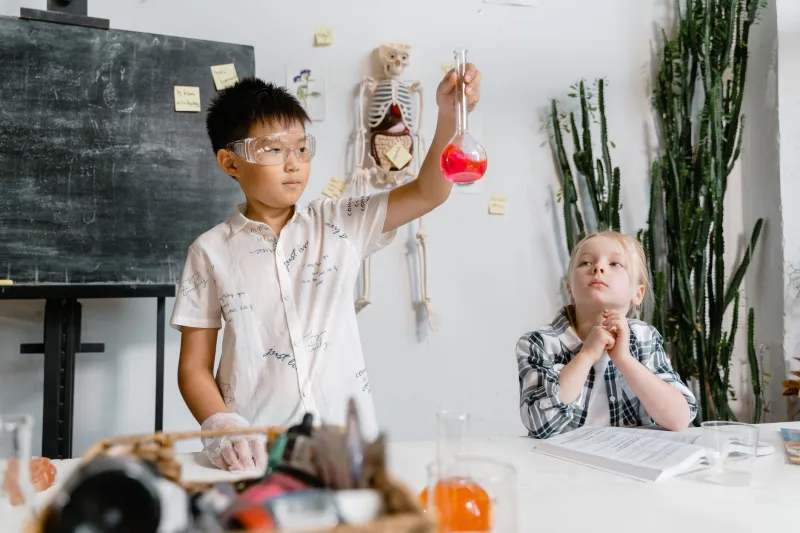
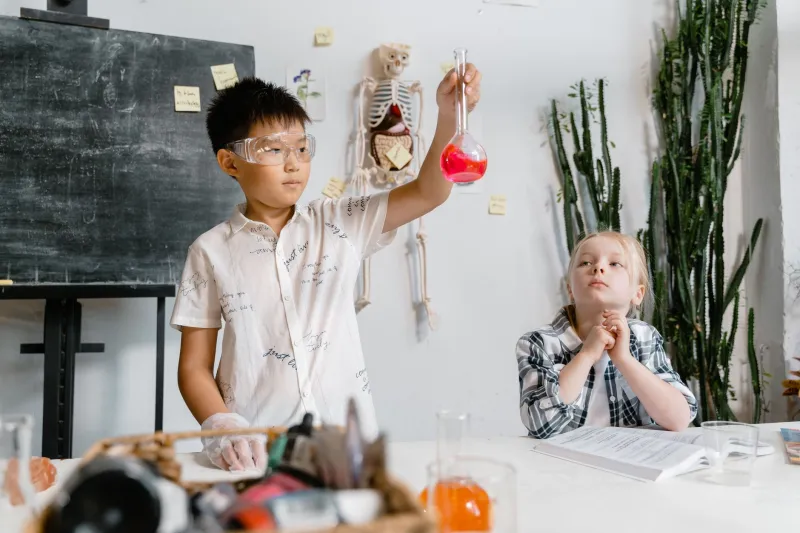
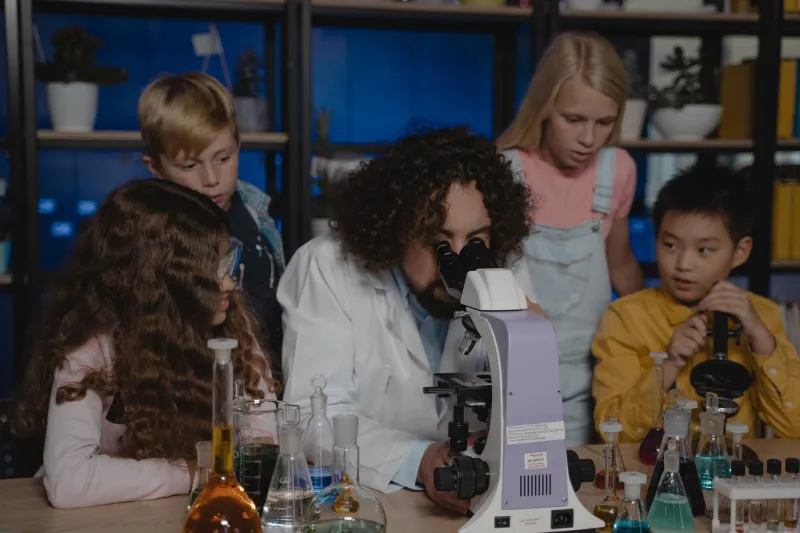
There is a quiet deception embedded in the typical American high school science class. Students are handed a printed procedure, directed toward the correct equipment, and guided through a sequence of steps that, if followed faithfully, will yield a specific, expected result. The lesson concludes. The data is recorded. The conclusion confirms what the introduction already announced.
What is missing from this picture is science itself.
In actual research laboratories — at universities, federal agencies, and private institutions across the country — experiments fail constantly. Reagents degrade. Equipment drifts out of calibration. Variables that appeared controlled turn out to be nothing of the sort. Researchers design follow-up studies specifically to determine whether earlier findings hold up under different conditions. This is not a flaw in the scientific process. It is the process. Yet the secondary science curriculum, as it is delivered in the vast majority of American schools, presents none of this to students before they arrive at a college laboratory bench and encounter it without warning.
The Architecture of the Scripted Experiment
The structured laboratory exercise has dominated American secondary science instruction for decades. Its appeal is understandable. In a classroom of twenty-five students, with limited equipment, a fixed class period, and an instructor responsible for both safety and learning outcomes, a carefully scripted experiment offers predictability. Students know what they are looking for. Teachers know what a successful lab report should contain. Administrators can point to hands-on learning as evidence of rigorous STEM instruction.
But this architecture carries a cost. When every experiment is designed to succeed, students internalize a distorted model of how scientific knowledge is actually generated. They come to understand the laboratory as a space for confirming what textbooks have already established, rather than as a site of genuine uncertainty where outcomes are genuinely unknown.
Dr. Keisha Okonkwo, a chemistry education researcher at a public research university in the Midwest, describes the pattern she observes each fall semester. "First-year students walk into introductory lab courses expecting a recipe," she explains. "When their titration doesn't land where it should, or their bacterial culture doesn't grow the way the protocol predicted, they assume they did something wrong. It rarely occurs to them that the experiment itself might be telling them something interesting."
This reaction — interpreting failure as personal error rather than scientific signal — is a direct product of secondary science instruction that has systematically removed ambiguity from the laboratory experience.
What the Replication Crisis Reveals About Scientific Literacy
Over the past fifteen years, the broader scientific community has grappled seriously with what is now commonly called the replication crisis: the discovery that a substantial proportion of published findings across fields including psychology, biomedicine, and social science cannot be reliably reproduced when independent researchers attempt to repeat the original studies. This crisis has prompted significant reflection about statistical practices, publication incentives, and the standards applied to experimental design.
For science educators, the replication crisis carries a specific pedagogical implication that has received insufficient attention. If professional scientists — trained researchers with advanced degrees and institutional resources — produce findings that fail to replicate at troubling rates, then the capacity to understand, evaluate, and respond to experimental failure is not a peripheral skill. It is a foundational one. And secondary science curricula are not building it.
Students who have spent four years conducting experiments that always work are poorly equipped to read a scientific paper critically, to evaluate conflicting findings, or to understand why a result published in a peer-reviewed journal might nonetheless warrant skepticism. The replication crisis is, among other things, a scientific literacy crisis — and its roots reach into the high school classroom.
The Psychological Dimension
Some educators defend the scripted laboratory approach on psychological grounds, arguing that students need early experiences of success to develop confidence and sustain motivation in STEM subjects. This concern is not trivial. Research on academic self-efficacy consistently demonstrates that students who believe they are capable of succeeding in a domain are more likely to persist when they encounter difficulty.
But the argument conflates two distinct things: the confidence that comes from genuine competence, and the fragile assurance that comes from never having been challenged. Students who have encountered only successful experiments have not developed resilience in the laboratory — they have developed an expectation of success that becomes a liability the moment they step into an environment where outcomes are genuinely uncertain.
Marco Delgado, a high school physics teacher in New Mexico who has spent several years redesigning his course's laboratory component, describes the shift he observed when he began introducing experiments with unpredictable outcomes. "The first time a student's data doesn't match the hypothesis, there's panic," he says. "But by the third or fourth time, something changes. They start asking better questions. They want to know why it didn't work. That curiosity is exactly what science requires."
Delgado's experience suggests that the psychological argument against exposing students to failure may be backward. Managed encounters with experimental uncertainty — structured so that students have the conceptual tools to interpret what went wrong — may build more durable scientific confidence than a steady diet of guaranteed successes.
Pathways Toward Authentic Instruction
A growing number of science educators are developing approaches that introduce meaningful uncertainty into secondary laboratory instruction without abandoning pedagogical structure. These approaches share several common features.
First, they distinguish between procedural failure — a student making an error that invalidates their data — and experimental uncertainty, which is a property of the investigation itself. Teaching students to recognize this distinction is a foundational step toward genuine scientific thinking.
Second, they incorporate explicit discussion of historical and contemporary examples of experimental failure. The story of American science is filled with productive failures: hypotheses that were rigorously tested and rejected, experiments that yielded unexpected results that redirected entire fields of inquiry. These narratives are largely absent from secondary science textbooks, which tend to present knowledge as a cumulative edifice rather than a contested, revisable enterprise.
Third, some educators are beginning to introduce modified replication exercises, in which students attempt to reproduce findings from published studies and then examine the degree to which their results align with the original data. This approach simultaneously teaches laboratory technique and scientific skepticism — two competencies that the current curriculum tends to treat as separate, when in fact they are inseparable.
An Institutional Responsibility
The problem is not one that individual teachers can solve in isolation. Curriculum frameworks, standardized assessments, and the institutional pressures that shape classroom practice all push in the direction of certainty and measurable outcomes. A laboratory exercise in which students produce variable or inconclusive data is difficult to grade using conventional rubrics. An experiment that fails to confirm the expected hypothesis may appear, on a standardized assessment, as evidence of poor instruction.
Addressing this gap will require deliberate action at the level of curriculum design, teacher preparation, and assessment policy. State science standards, in particular, have an opportunity to signal clearly that experimental uncertainty is not a deficiency to be corrected but a feature of authentic scientific inquiry to be cultivated.
The students who will staff the next generation of American research institutions are currently sitting in high school classrooms, learning that experiments succeed. Before they arrive at the university laboratory, they deserve to learn something truer and more useful: that experiments often do not, and that this is where the most important scientific work begins.