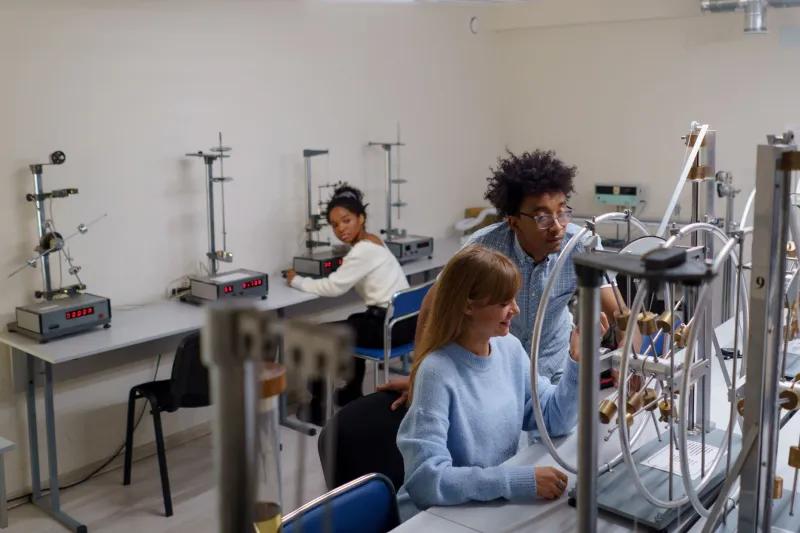
From Classroom to Field: How Citizen Science Is Transforming Secondary Science Education Across America
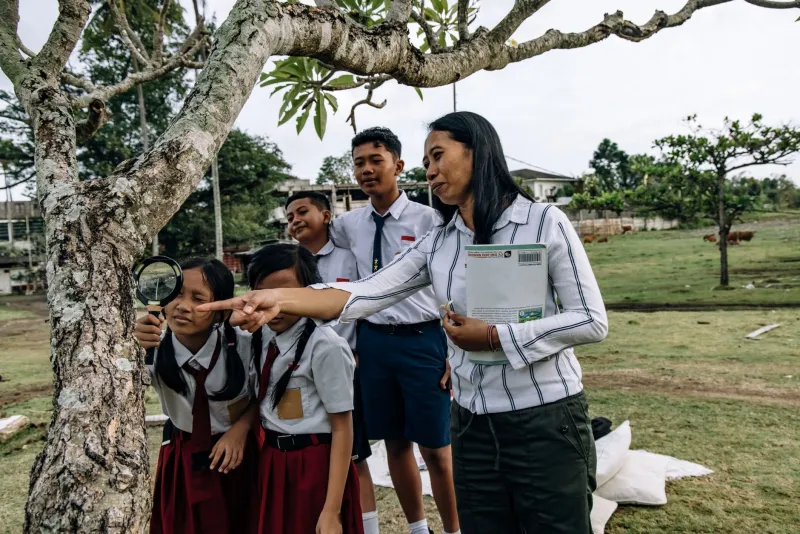
On a Tuesday morning in late September, a group of tenth-graders in rural Vermont is not sitting at desks copying definitions from a biology textbook. They are crouched along the banks of a tributary stream, carefully recording water temperature, pH levels, and macroinvertebrate counts using protocols developed in collaboration with researchers at a nearby state university. The data they collect will be uploaded to a shared database that scientists will analyze alongside observations from dozens of other monitoring sites across the region. These students are not simulating science. They are doing it.
This scene is no longer exceptional. Across the United States, from Pacific Northwest forests to Florida wetlands, secondary school science programs are integrating citizen science methodologies into their curricula with striking results. The movement represents one of the most substantive reimaginings of high school science instruction in a generation—and educators, researchers, and students themselves are taking note.
What Citizen Science Brings to the Secondary Classroom
Citizen science, broadly defined, involves the participation of non-professional volunteers in structured scientific data collection or analysis. At the secondary level, it takes on particular educational significance because it dissolves the artificial boundary between classroom learning and authentic inquiry. Students are not completing exercises with predetermined outcomes; they are contributing observations that carry genuine scientific value and that professional researchers depend upon.
The pedagogical benefits are well-documented. Research published in educational psychology and science education journals consistently finds that students who participate in real-world research projects demonstrate stronger conceptual understanding of scientific processes, greater facility with data interpretation, and markedly higher levels of intrinsic motivation compared to peers in traditional instructional settings. Crucially, these gains appear across demographic groups, suggesting that citizen science may serve as an equalizing force within science education.
For high school students in particular, the developmental timing is significant. Adolescence is a period during which academic identity is actively formed. An experience that positions a sixteen-year-old not as a passive recipient of scientific knowledge but as a legitimate contributor to a research enterprise can fundamentally reshape how that student understands their relationship to science—and whether they can envision themselves within it.
Case Study: Biodiversity Monitoring in the Pacific Northwest
At a public high school in the Willamette Valley of Oregon, a collaboration with regional ecologists has turned a semester-long environmental science elective into a multi-year biodiversity monitoring effort. Students survey designated plots for native plant species, track pollinator populations, and photograph and catalog insects using iNaturalist, a widely used citizen science platform that connects amateur observers with professional taxonomists.
The program's lead teacher, who holds a graduate degree in ecology and worked in field research before transitioning to secondary education, describes the transformation in her students' engagement as unmistakable. Students who were disengaged in conventional lab settings became meticulous and invested when they understood that their records would contribute to a longitudinal dataset tracking habitat change. Several graduates of the program have gone on to pursue environmental science and ecology at the university level, crediting the fieldwork with shaping their academic trajectories.
The partnership with university researchers also provides an ongoing professional development resource for the teacher herself, keeping her connected to current scientific practice in ways that isolated classroom instruction rarely permits.
Case Study: Atmospheric Data Collection in the Southwest
In the Albuquerque metropolitan area of New Mexico, a different model of citizen science integration has taken root within a network of public high schools participating in a regional air quality monitoring initiative. Students operate low-cost particulate matter sensors installed on school grounds, calibrate instruments, clean and validate data, and contribute to a community-wide atmospheric dataset used by municipal health planners and university researchers studying the relationship between air quality and respiratory health outcomes.
The program has been particularly effective at connecting science instruction to issues of immediate community relevance. Students whose families have members with asthma or other respiratory conditions bring a personal investment to the work that transforms abstract scientific concepts into matters of lived consequence. Teachers report that discussions of data uncertainty, measurement error, and statistical analysis—topics that can feel remote and technical in conventional settings—become vivid and purposeful when students are grappling with real sensors producing real data about the air their communities breathe.
Case Study: Marine Ecosystem Observation on the Gulf Coast
Along the Texas Gulf Coast, high school students in a coastal sciences program are partnering with marine biologists to conduct seagrass health assessments in shallow bay systems. Using standardized transect methods developed by university researchers, students collect data on seagrass coverage, density, and associated fauna that feed into regional ecosystem assessments. The program operates across multiple schools, creating a distributed monitoring network that provides spatial coverage no small research team could achieve independently.
For students in communities where the health of marine ecosystems directly affects local fishing economies, the research carries economic as well as ecological weight. Program coordinators note that the practical stakes of the work—and the visibility of their contributions within the broader research effort—sustain student engagement across an entire academic year in ways that conventional coursework rarely achieves.
Practical Guidance for Educators
For science teachers and department heads considering citizen science integration, several practical principles emerge from successful programs across the country.
Identify a research partnership early. The most effective programs are built around genuine collaborations with university researchers, government agencies such as the U.S. Geological Survey or National Oceanic and Atmospheric Administration, or established citizen science platforms including SciStarter, iNaturalist, or Globe Observer. These partnerships provide scientific credibility, methodological guidance, and a meaningful destination for student-collected data.
Align projects with curriculum standards. Citizen science activities need not exist outside the formal curriculum. The most durable programs are those in which teachers have mapped project activities explicitly to Next Generation Science Standards or state-level equivalents, ensuring that participation supports rather than competes with required instructional objectives.
Build in structured reflection. Authentic research experiences are most educationally valuable when accompanied by regular opportunities for students to articulate what they are learning, identify questions that their data raise, and connect fieldwork to broader scientific concepts. Journaling, group discussion, and presentation components serve this function effectively.
Start modestly and scale deliberately. Teachers new to citizen science integration often find that beginning with a single project component—one data collection protocol, one platform, one research question—allows them to develop confidence and institutional knowledge before expanding the program's scope.
Communicate outcomes to students. One of the most powerful features of citizen science is that students can observe their data being used. Sharing published research findings, agency reports, or researcher communications that cite student contributions reinforces the authenticity of the work and deepens students' sense of scientific agency.
The Broader Significance for American Science Education
The expansion of citizen science in secondary schools reflects a broader recognition that science education must evolve beyond the transmission of established facts toward the cultivation of scientific habits of mind—curiosity, rigor, tolerance for uncertainty, and the capacity to contribute to collective knowledge. These dispositions are precisely what research institutions and STEM employers identify as most valuable and most difficult to develop through conventional instruction alone.
As American high schools seek to produce graduates who are not merely scientifically literate consumers of information but capable participants in a knowledge-producing society, citizen science offers a compelling and increasingly well-evidenced pathway. The field, the stream bank, the monitoring station, and the shared database are not distractions from serious science education. For a growing number of students and their teachers, they are where serious science education begins.